I'm not sure if "culture" is the right word here; this is just a collection of my perceptions of what Icelanders think and do. Our 10-day trip was my first outside of Asia and North America, and it was long enough for some interesting observations.
Low Consumption of Resources
Perhaps due to the small population of residents and tourists, everything appeared to be on a smaller scale than what we were used to in the states or even in Taiwan, including convenience stores, supermarkets, hotels, and museums.
The first photo below was the Whale Museum in Husavik, which seemed to to be a converted warehouse of some sort, with the hand-painted cartoon whales on the walls. This cute little building was definitely not what I had expected to see in this famous whale watching harbor town. But then we saw the Seal Museum in a famous seal-watching peninsula, which turned out to be a tiny room inside a small building, and realized that the Whale Museum was actually gigantic!
Most of the exhibits in the national museum system were historic sites, such as the turf houses in the second photo below. Only the Iceland National Museum in Reykjavik resembles the stereotypical idea of a "museum" (third photo below).


At the supermarket or regular store check-out, there was no bagging service so you either bring your bag or get one of their tiny thin plastic bags yourself. Over the 10-day trip, I don't remember seeing any Styrofoam product for food or drink. The majority of the automobiles on the road were the smallest models from various makers and rarely did I see any car from a luxury brand, not even in the capital city. My overall impression was that the whole lifestyle was geared toward conservation of resources.
Interestingly, the largest man-made structures we saw were the geothermal power plants, including the one in the photos below near the volcanic crater Viti. The geology of Iceland offers an abundance of the natural energy source, at least more than sufficient to support the Icelandic population. From what we could see, residents outside of the capital city maintained a rather simple farming/ranching lifestyle anyway. As tourists, we were definitely grateful that the numerous majestic waterfalls were not tapped for power generation.
Clean and Neat
The restrooms (called WC or toilet) were not always present at the places we visited, but all of them were spotless and stink-free regardless of how remote the locations were. This is a (good) departure from what we are used to in the National Park System in the states, but the responsibilities rest, with the tourists as much as the National Park Services.
Below are two of the cute restrooms we "visited" on the trip. The first set of restroom stalls (triangles on the left) were located in a small island with no permanent residents, specifically for the use by the tourist group coming to visit on the daily boat tour. I was really surprised to find it as clean as possible because that meant that somebody had to be driving a boat for about an hour each way to clean the stalls regularly!
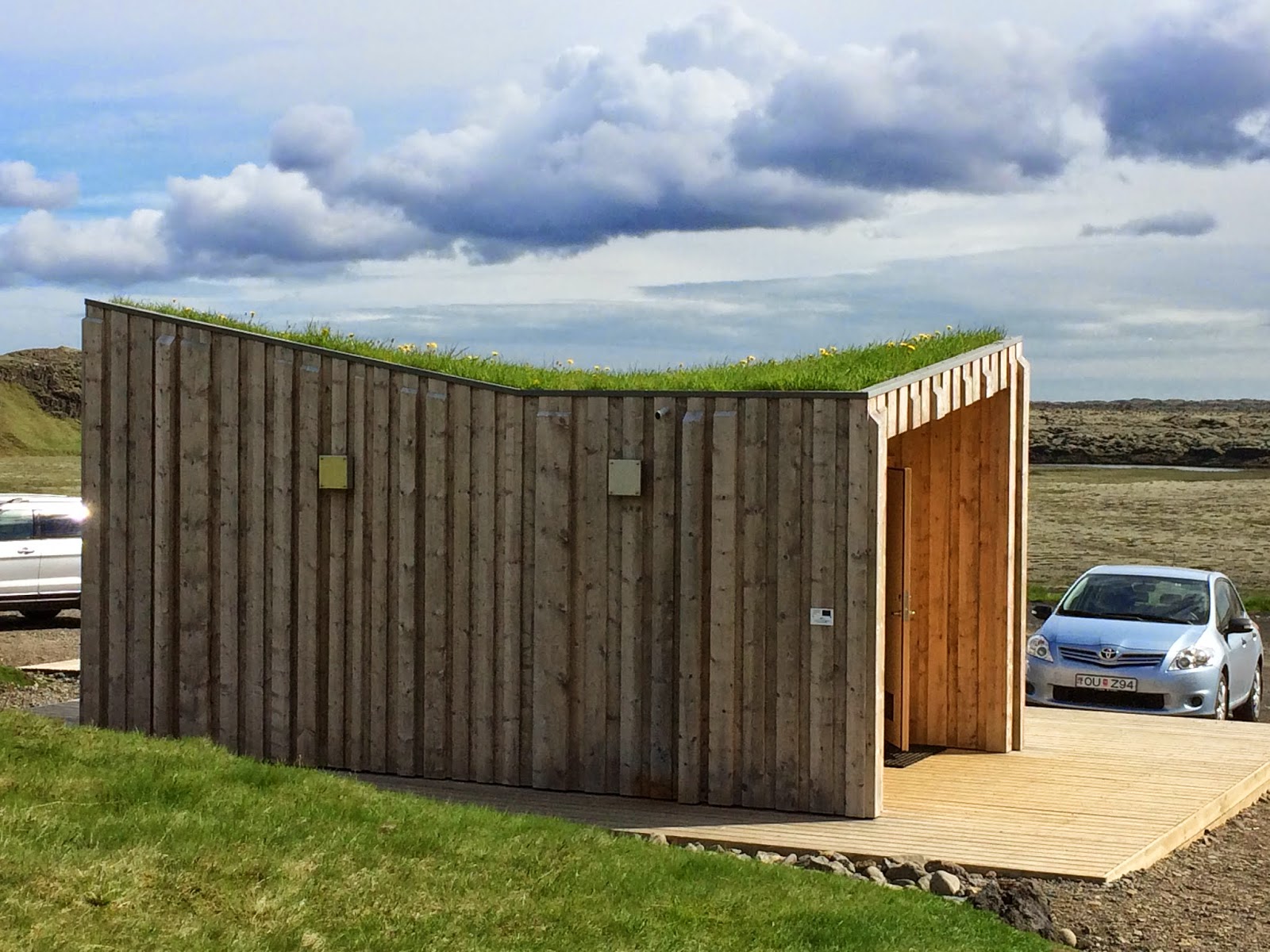
The restroom in the second photo below had a funny shape and a retro-styled turf roof where grass and flowers were allowed to grow, which should have kept the restroom relatively warm in the winter and cool under the summer sun.
.JPG)
Another observation was that all of the eating places were also spotless and do not smell like food or anything else. I suspect that it was at least partly due to the less greasy cooking style of Icelandic cuisine. But it's obvious that the overall standard for cleanliness is just higher in Iceland than in all other countries I have been to.
In my other post about the food experience in Iceland, I included some photos of the restaurants we went to. Here are the pictures I took of the breakfast rooms at some of our hotels around the island.
Trust
For lack of a better word,I'm calling this section "trust," as in the opposite of excessive concern about certain things.
In contrast to the standard of hygiene for the dining rooms, Icelanders don't seem to be as concerned about germs from the human hands. Whenever bread is offered in the buffet (for breakfast or dinner), no serving utensils were provided. I guess it's reasonable to expect every guest to refrain from touching any piece of bread that he/she is not taking. But when the whole loaf of bread was served, I had no choice but to hold the loaf with one hand while using the knife with the other. Having been "well-trained" in Taiwan and the states, I couldn't help but feel guilty to be contaminating the loaf with my germs! At the same time, though, it infused me with a sense of nostalgia for the simpler way of life when people didn't have to guard against one another so much, and when the store keeper would take my saved-up coins and hand me the bulk candy in an old dusty jar.
In the picture below, we were on our way back to the hard on the whale-watching boat. We were offered hot chocolate and cinnamon rolls as it was pretty cold and we had been at sea for 3 hours. You can see that the tour guide was serving the rolls by hand.

In a few places frequented by tourists, we saw little donation jars for people to chip in for nature/history conservation or service enhancement but they were left in public places with no supervision whatsoever. One of them was on the shelve in a restroom stall, with the whole lid open and nothing inside. But the others I saw were not empty.
On our eighth night, we stayed at a little inn, probably converted from a private residence. The hostess had left for home before we arrived that night, so she left the front door to the building open and left us a note with the room key on the counter.
I suspect that these trusting behaviors may be somewhat related to the fact that Iceland has long been a small country with a small population. If people know one another, they may behave better and expect others to behave similarly based on the common social norms.
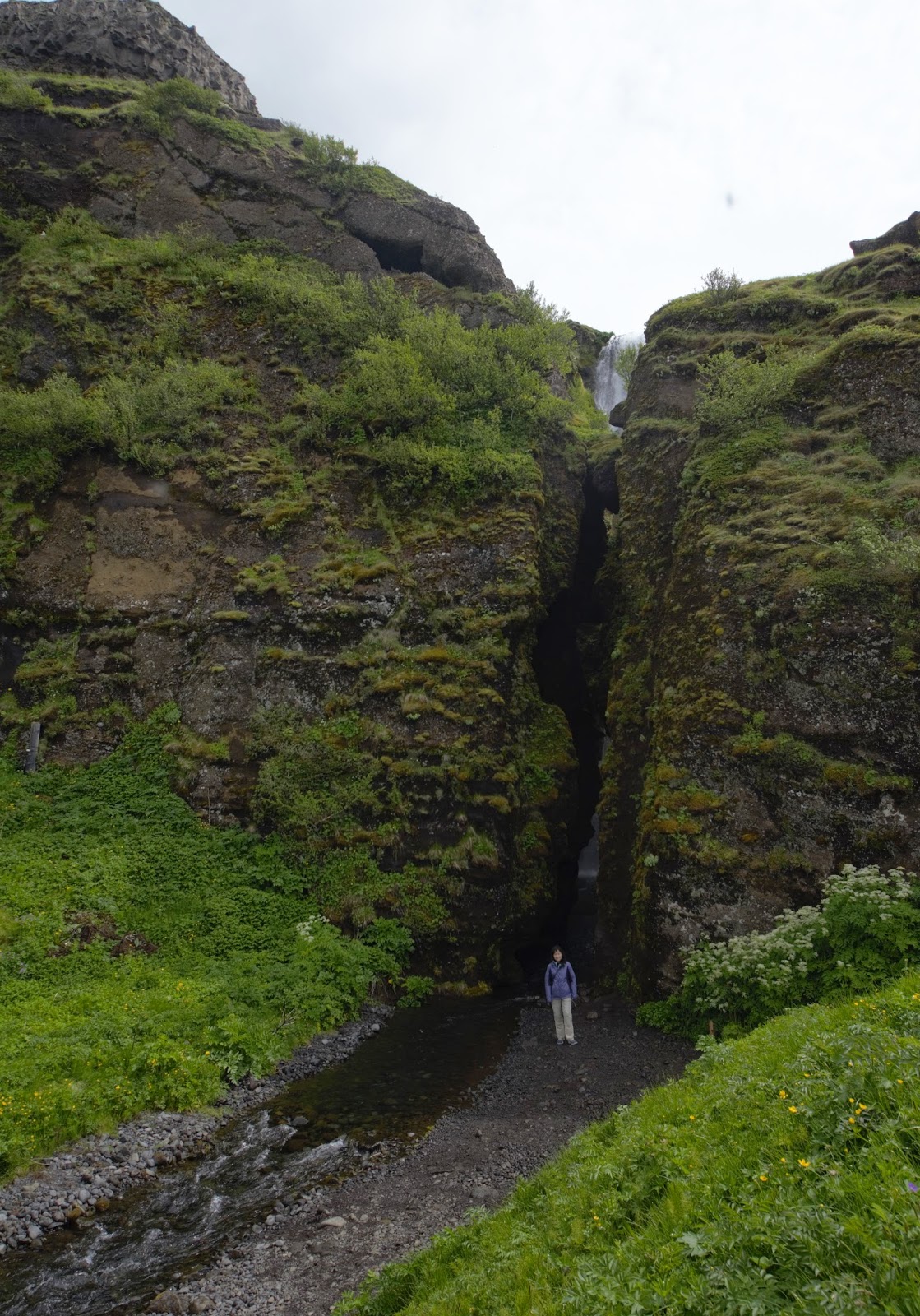
As tourists, we felt completely independent and free to do what we wanted wherever we went. The Icelanders clearly value freedom more than the need to restrict tourists' behaviors for safety. In other words, they trust the tourists to protect themselves! For example, there was no fencing at any coastal cliff, tall waterfall, or canyon walls. I probably would have had numerous panic attacks if we brought little kids to any of those places, where the possibilities of accidents were endless. Some of our photos make those places look rather scary afterwards...
Communicating with pictures
I may be imagining things here, but I think the Icelanders love to communicate with pictures. Take road signs as examples, a lot of them had no words (in any language) and thus require some imagination on the part of the interpreter.
We drove past this cute little dragon sign posted by a lake. Along with the picnic sign, I interpreted it to mean: Here's a good spot for having a picnic while looking at the lake, which is the lake where the monster was said to reside. Somebody on the internet offered an alternative interpretation: This is a good spot for having a picnic while observing the lake monster.
On the first day, we drove by a couple small towns and noticed this sign below, with the houses and church crossed out. No settlement allowed?
Then we started to pay more attention and realized that the sign below would appear as we entered the boundary of a town/village, and then the sign above would appear as we left the town boundary! We also concluded that the signs for different towns were the same, with the same number of houses and a church, regardless of how big the town was. But on the last day, we saw that the city boundary sign for the capital city, Reykjavik, had one additional house in the sign! After all, almost 3/4 of the Icelanders do live in the capital.
Once we know what the city/town boundary signs mean, it is now possible to interpret the partially obstructed sign above, behind the "end of town" sign. I found a complete version from the web to explain, see below.
During our ten-day driving tour, we saw this warning sign below many times. Fortunately it was pretty straight forward: Single-lane narrow bridge ahead! Once you pass the sign, there will be a passing point where the shoulder is slightly wider for you to wait for the on-coming car to cross the bridge first.
The set of signs in the picture below is not as clear to me. By now I knew that the symbol similar to a four-leave clover in the middle indicated a landmark or place of interest. The top graph might mean that only pedestrians and bicycles can continue forward (but not motor vehicles). But does it apply to the trail on the left or the one on the right? The left trail led to a private rancher's property but there was a passage way to get to the historic turf houses site. The right trail actually led directly to the historic site. Finally, the bottom graph was really puzzling to me: Only pedestrians can take the right trail?
Sometimes the signs do have English, like the one below. Clearly the graphic representation of the fecal matter was not necessary but an attempt for comic effects? We've only seen this once on the trip.
When the words on a sign were Icelandic, of course the picture becomes crucial for us, such as the one below. The meaning of this gigantic sign was clear enough, but I did not notice the number printed on the cross at the time. According to some sources I found, it is the accumulated number of people died from car accidents in the current year in the whole country.
Playing with rocks
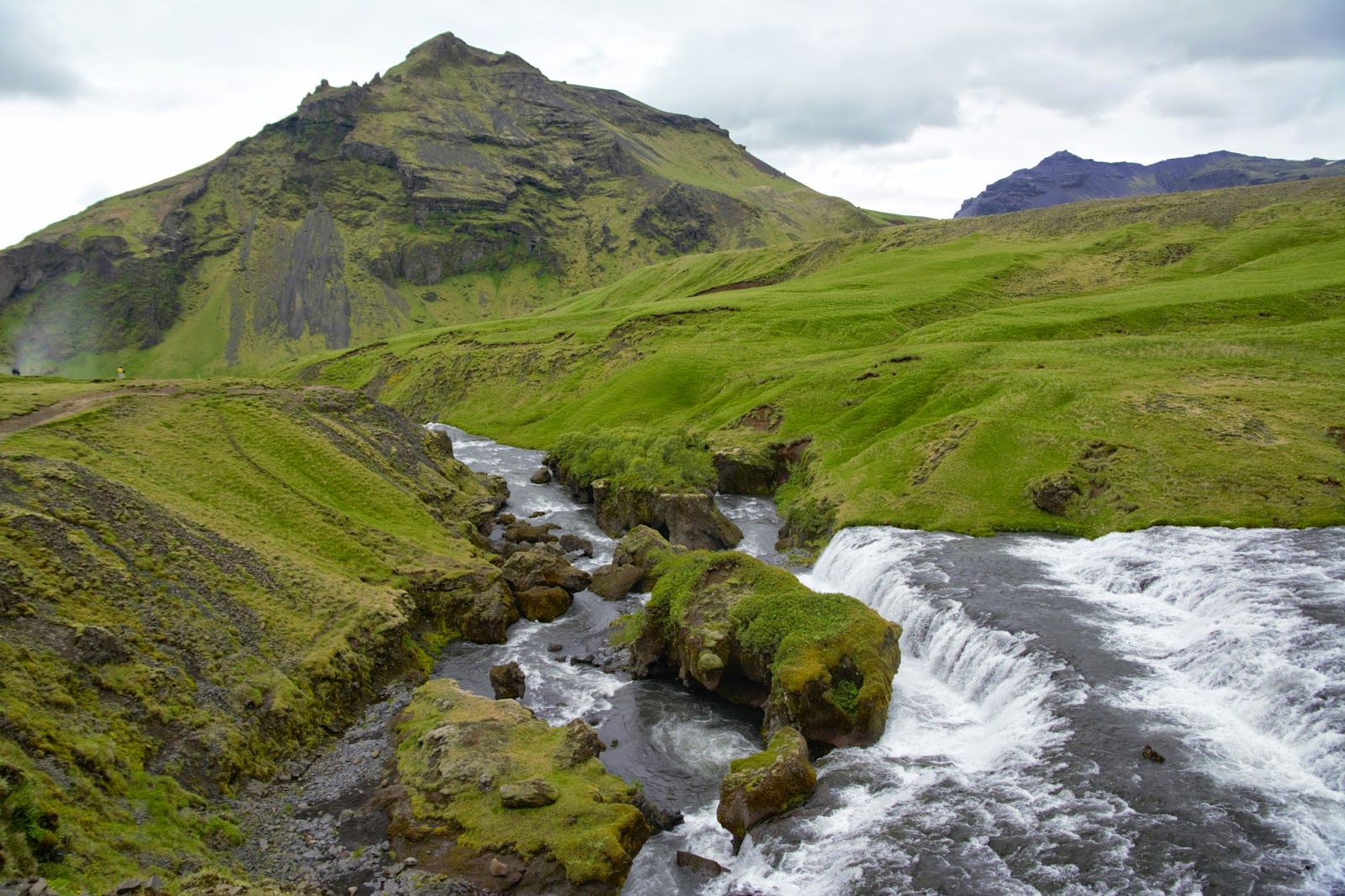
If I have to pick the most impressive feature of Icelandic beauty, I would say it's the rocks. The most awe-inspiring places to me were the rock formations and creations that became canyons, cliffs, and contours of the mountains. It was the unique rocky background that distinguished each of the Icelandic waterfalls.
But rocks on a much smaller scale were interesting in Iceland as well. They were like the national toys! A restaurant owner displays the heart-shaped rock collection in the first two pictures; the enormous glacier deity was built with rocks in the third photo.


Hikers know how critical the cairns can be in staying on track when the trails are not clear. The convention is that hikers would add rocks to the cairns as continuous maintenance of the trail markers. Bob loves doing it and often challenges himself with difficult stacks.
In one particular place, the Icelanders have taken the cairn building tradition to a new height. At the site of an ancient farm that was destroyed (more than a thousand years ago) by a the first eruption of volcano Katla, each Icelander passing by the site for the first time was supposed to contribute one rock to a cairn as a gesture of wishing the dead good luck in their journey after life. The Iceland road administration regularly transports new rocks to this site so that modern tourists can continue the tradition!
There were also more realistic rock stacks that resemble human or animal shapes. Some of them were simplistic, as in the first two photos below, others were mind-boggling, such as the one in the third picture, captured from a far distance while we were driving to the airport on the last day. The rocks must have been huge so how did people move them around to stack them?


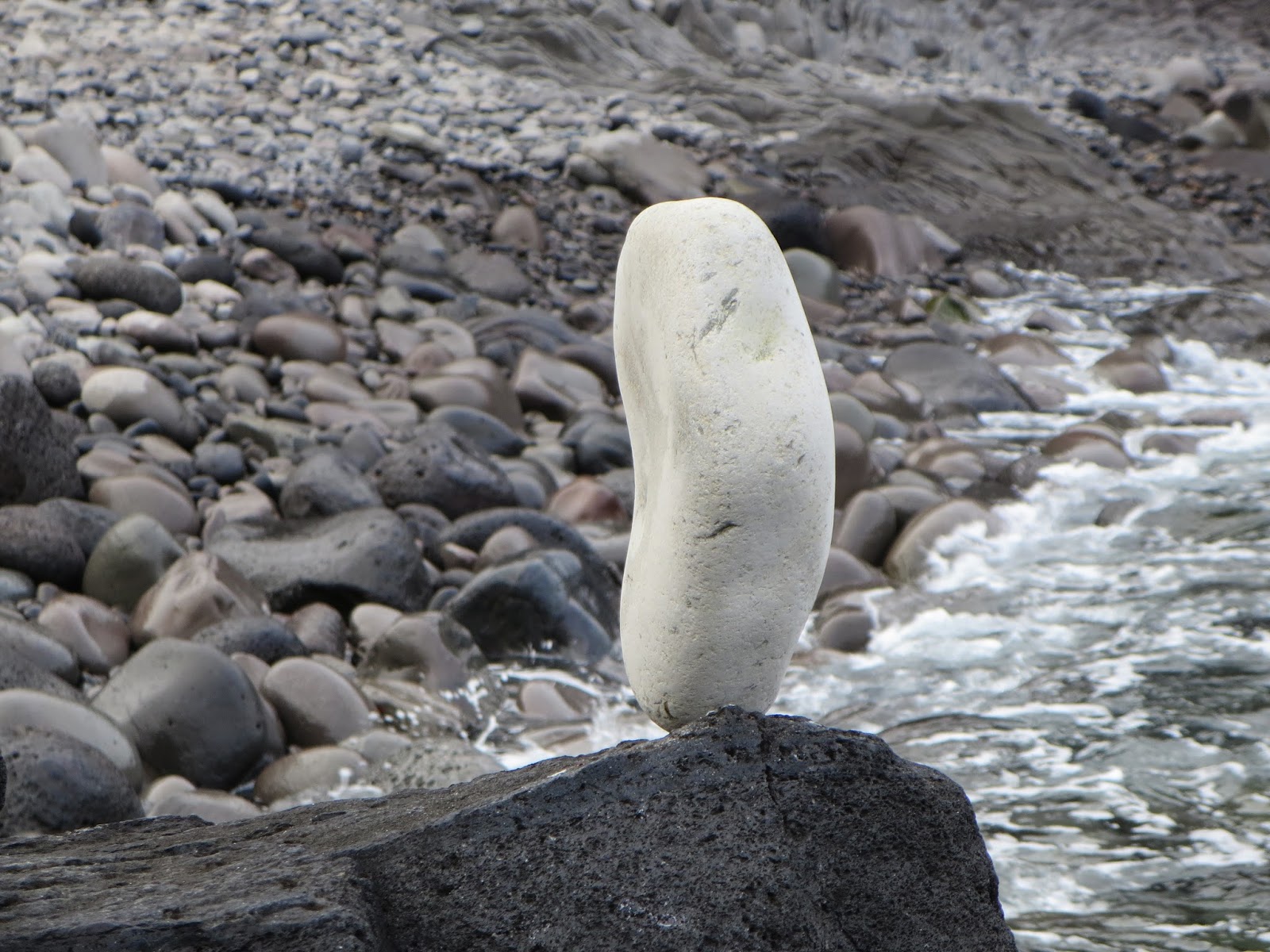
Bob had the most fun stacking rocks on the eighth day when we visited a famous rock arch by the coast. As we approached the rocky beach, I saw many big white birds standing on a group of black rocks by the beach. But then I realized that the completely still white birds were actually stones standing freely on their pointy ends. Driven by my curiosity, I touched one of the standing rocks and broke its balance! Oops!!
After Bob had taken enough photos of the stone arch, he came over to try his hand on making rocks stand. He got it rather quickly and soon started to add to the existing collection with rocks that were increasingly difficult to balance. In the end, he restored the one I knocked down and created a two-rock creation with a small one on top of a larger one.
This was the existing collection when we arrived there.
My guilty look after knocking down a balanced rock
Some of Bob's contributions
The collection as we left it
I captured a few of the rock stacking attempts on video, including this one below:






.JPG)


.JPG)